Praxis AI decision systems and enterprise decision architecture

Decision Architecture

AI changes how products behave, how people decide, and how organizations govern.

Distributed Authority

Escalation, Oversight, Accountability

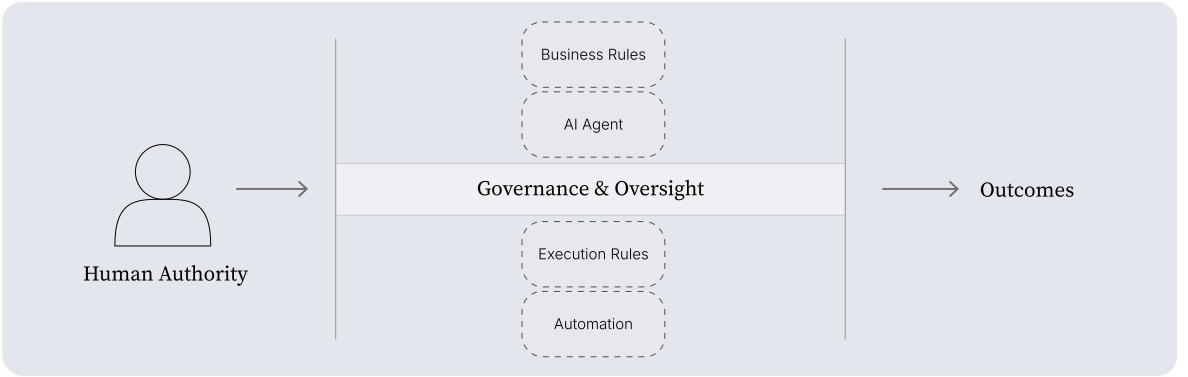
Decision architecture showing how human authority, governance, business rules, AI agents, automation, and accountability connect across product execution
AI changes how authority moves through organizations and across connected systems.

Actions once coordinated by people increasingly move through products, agents, workflows, and embedded automation.

As execution becomes more autonomous, organizations increasingly redefine:
  • who can act
  • what requires escalation
  • where intervention occurs
  • how accountability persists
  • which decisions remain reversible

Without clear operating models, autonomy expands faster than governance can adapt.
Escalation & Reversibility

Autonomy Requires Boundaries

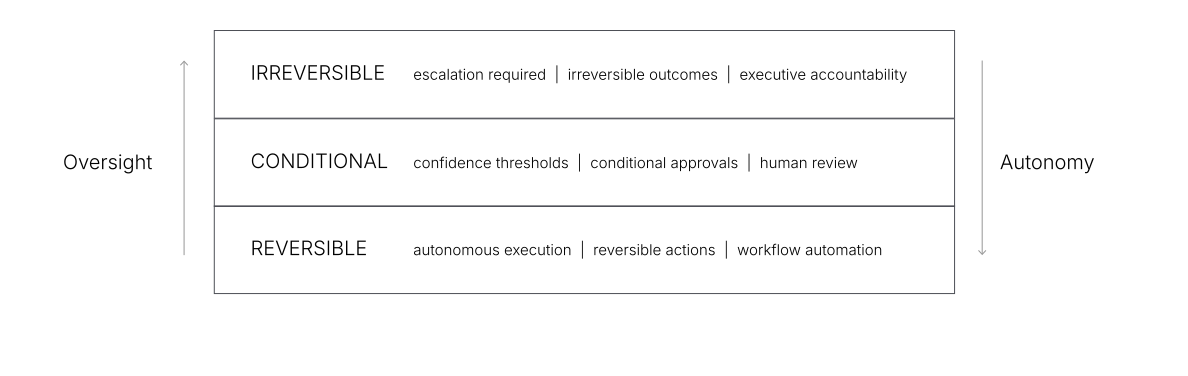
AI decision governance model showing how risk and reversibility determine autonomy, oversight, escalation, and human intervention
Not all operational actions carry the same level of risk, consequence, or reversibility.

Not every decision deserves the same level of autonomy. Treating reversible and irreversible actions the same creates unnecessary risk.

As AI systems become more autonomous, organizations increasingly redefine:
  • which actions can execute independently
  • where escalation becomes necessary
  • how intervention structures are introduced
  • which decisions remain reversible
  • how accountability persists across workflows

Operational control must evolve as execution becomes increasingly autonomous.
Operational control must scale alongside autonomous execution

Accountability Systems

Visibility Across Execution

Responsibilities, escalation paths, and intervention boundaries cannot remain ambiguous once AI participates operationally.
Trust is earned when products make decisions that remain visible, traceable, and accountable.
As autonomous participation expands, governance structures must scale alongside execution capability.
Trust scales when autonomous execution remains governable.