
AI enters at the wrong moment. Oversight between human and system becomes ambiguous. Review structures are added reactively. Verification repeats across the workflow instead of occurring intentionally.
The result is coordination debt.
AI Workflow Orchestration
AI creates value when coordination improves. It creates friction when workflows break around it.
The challenge is not capability
it’s operational integration
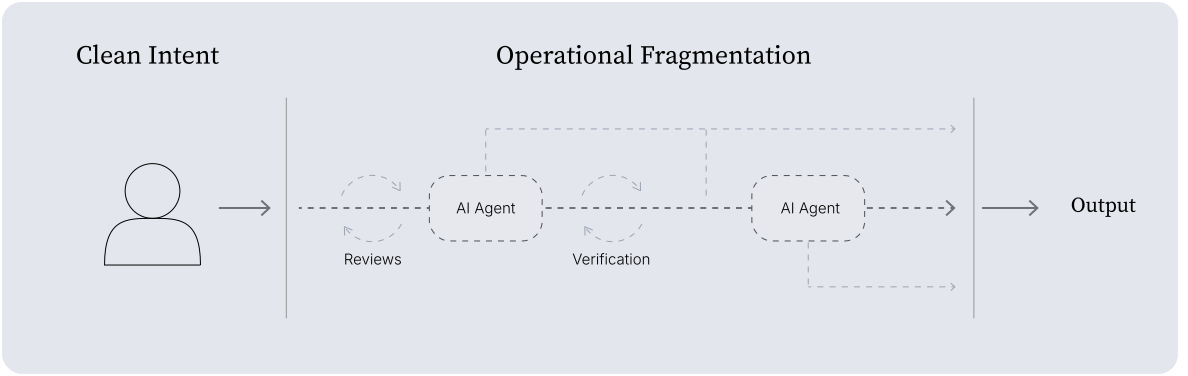
Capability is rarely the limiting factor. Orchestration usually is.
Operational Friction:
- duplicated oversight
- fragmented trust signals
- inconsistent workflows
- increased escalation behaviors
- disconnected operational states
Orchestration Requires Balance:
- human judgment
- workflow timing
- system confidence
- escalation structures
- accountability controls
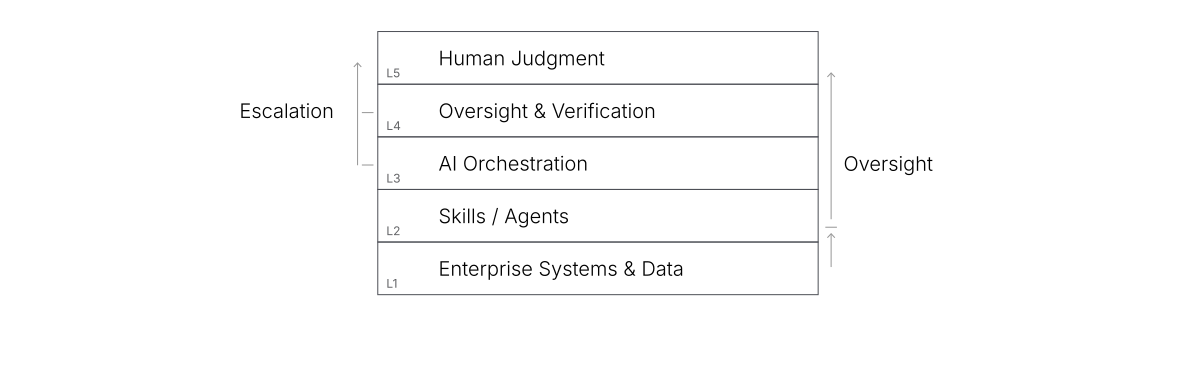
Orchestration
the design of coordinated execution
1
Participation Boundaries
Define clear participation boundaries. Determine where autonomous execution is suitable and when human authority must intervene.
2
Workflow Timing
Implement sequenced oversight. Shift from continuous human-in-the-loop dynamics toward conditional, context-aware validation that supports execution without constant intervention.
3
Verification & Escalation
Formalize escalation pathways. Establish explicit triggers for exception handling, review thresholds, and reversibility protocols. Clarity reduces operational friction.
4
Operational Awareness
Capture operational state. Coordinated execution depends on knowing where work stands, who owns it, and how decisions were made.
Orchestration succeeds when execution is coordinated rather than improvised.
Operational Implications
coordination reshapes organizational behavior
Trust Becomes Operational
Trust doesn’t end at the interface. It extends across the entire workflow. As AI participation expands, trust increasingly depends on visibility, predictability, escalation clarity, and operational continuity.
Human Roles Evolve
Human participation shifts away from direct execution toward exception handling, escalation judgment, approval authority, and workflow coordination as operational systems become more autonomous.
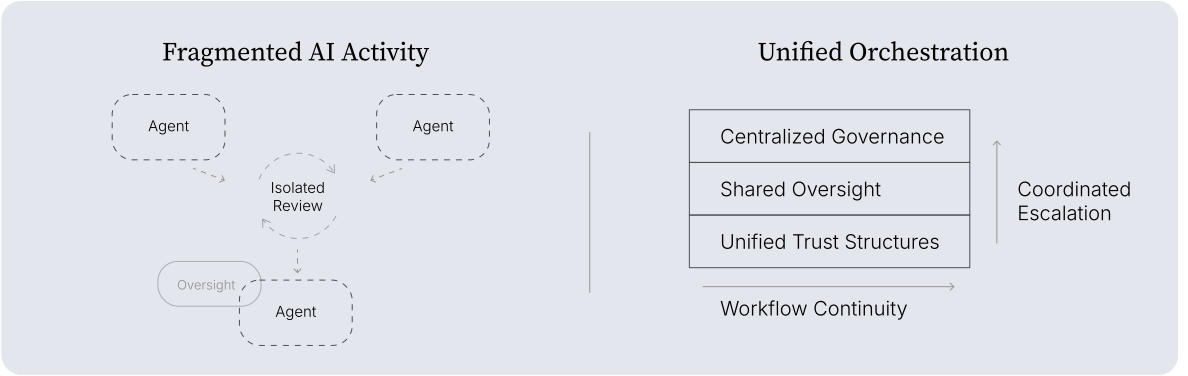
Fragmentation Creates Debt
Disconnected AI systems multiply friction through duplicated work, conflicting decisions, fragmented governance, and inconsistent workflows.
AI adoption succeeds when coordination scales faster than fragmentation.
Operational Systems
coordinated execution creates durable transformation
Structured Execution
Responsibilities, oversight, and escalation paths cannot remain ambiguous once AI participates operationally.
Operational Trust
Trust emerges through predictability, accountability, reversibility, and governance continuity over time.
Scalable Coordination
As AI involvement expands, coordination systems must scale with it or fragmentation compounds faster than adoption.